
Understanding and Reducing Risk Among Young Road Users
We worked with the Safer Essex Roads Partnership (SERP) to deliver two in-depth analytical reports focused on young drivers (aged 16–24) and young motorcyclists (aged 16–29). These projects were designed to support SERP’s strategic objective of reducing road casualties by developing a more precise, evidence-led understanding of risk among high-risk road user groups.
Across both reports, we combined advanced statistical analysis of large-scale national datasets with behavioural science frameworks to provide a richer, more actionable understanding of why risk emerges and how it can be reduced.
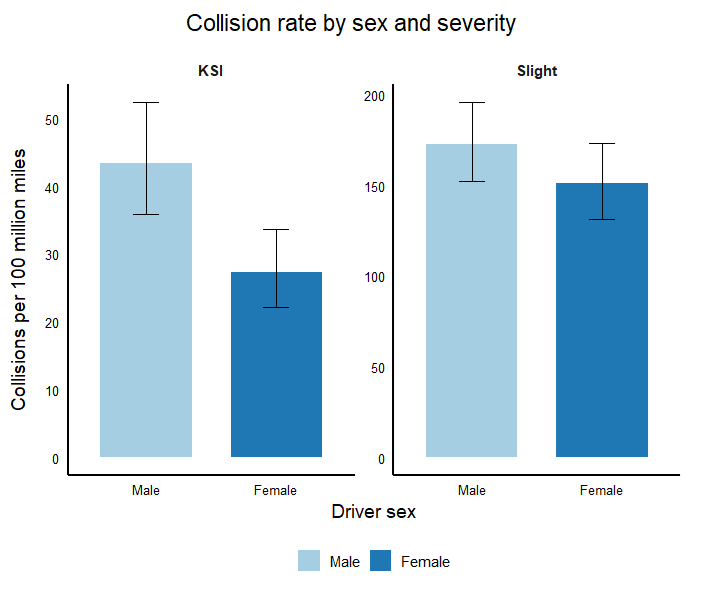
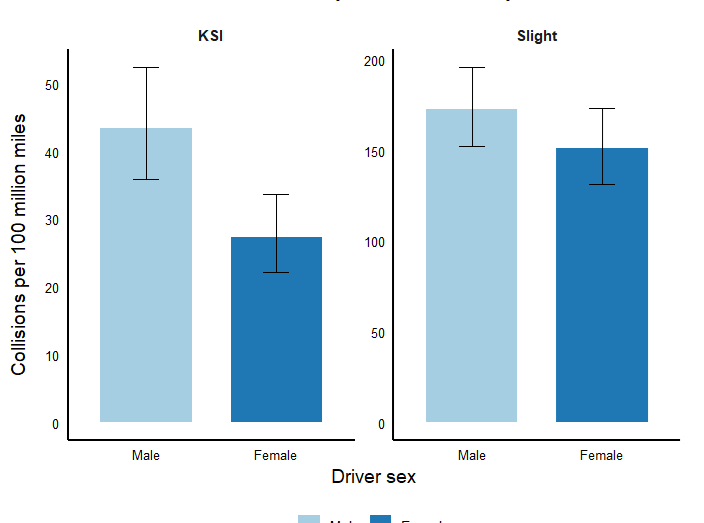
At the core of the work was the integration of multiple complex data sources, including police-recorded collision data (STATS19) and travel exposure data from the National Travel Survey. This allowed for the estimation of risk not simply in terms of collision counts, but in relation to exposure (e.g. distance travelled), producing more meaningful and policy-relevant metrics such as collision and casualty rates per distance travelled.
We applied robust modelling approaches to examine how risk varies across age, gender, geography, and time. This enabled the identification of whether observed patterns reflected genuinely elevated risk or differences in exposure. The work explained how young road users’ elevated collision involvement reflects underlying behavioural and contextual risk factors.
By modelling injury severity and collision involvement, we were able to show how risk is not evenly distributed: certain groups, behaviours, and contexts are disproportionately associated with more severe outcomes. This provides a more targeted basis for intervention design.
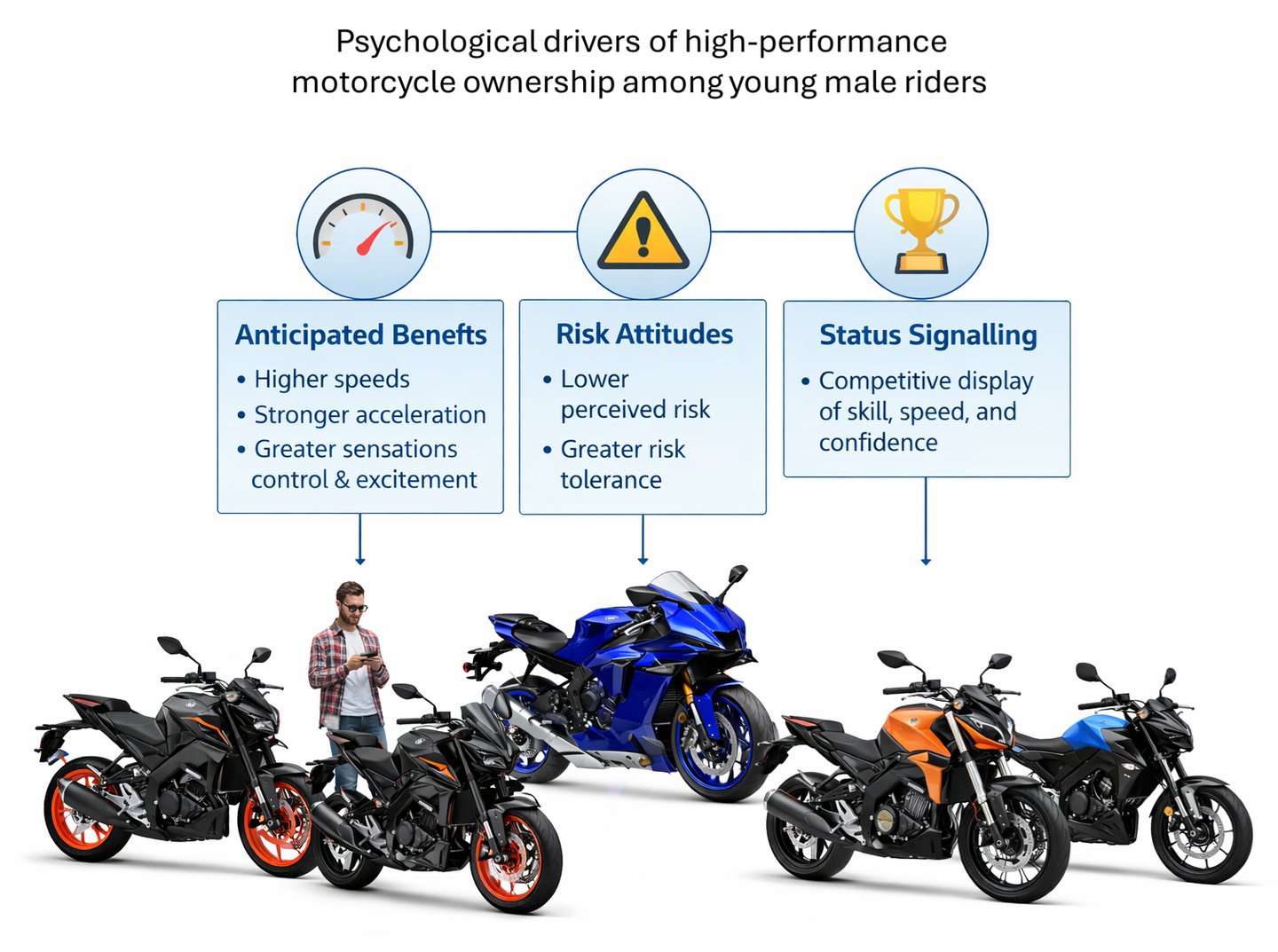
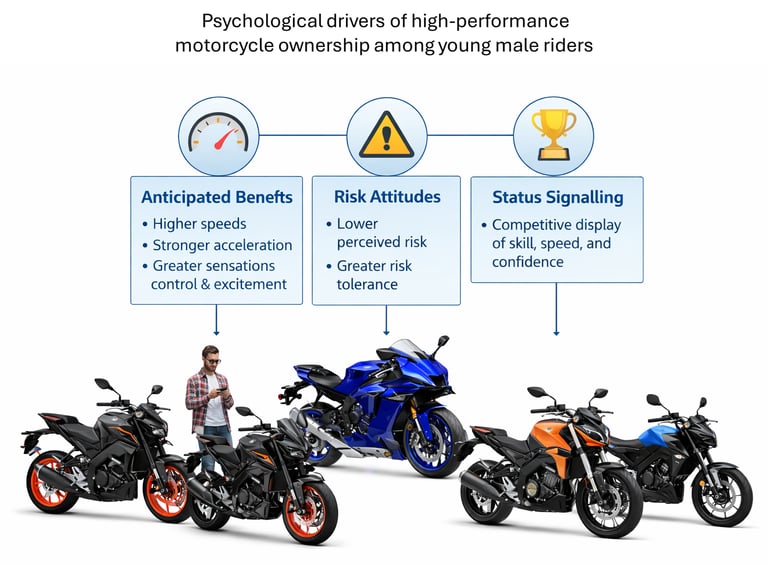
Preference for high-performance bikes among young male riders
The work also addressed developmental and social influences on behaviour, including the role of peer presence, social signalling, and the maturation of cognitive control.
For example, the elevated involvement of young male riders in high-performance motorcycle collisions and overtaking misjudgement crashes does not simply reflect poor judgement. Rather, it reflects deeper motivational systems that prioritise reward, status, and competition.
These motivations make behaviours such as riding high-performance motorcycles or attempting risky overtaking manoeuvres appear particularly rewarding, helping to sustain the patterns observed in the collision data.
Insight into motorcycle type risk profiles
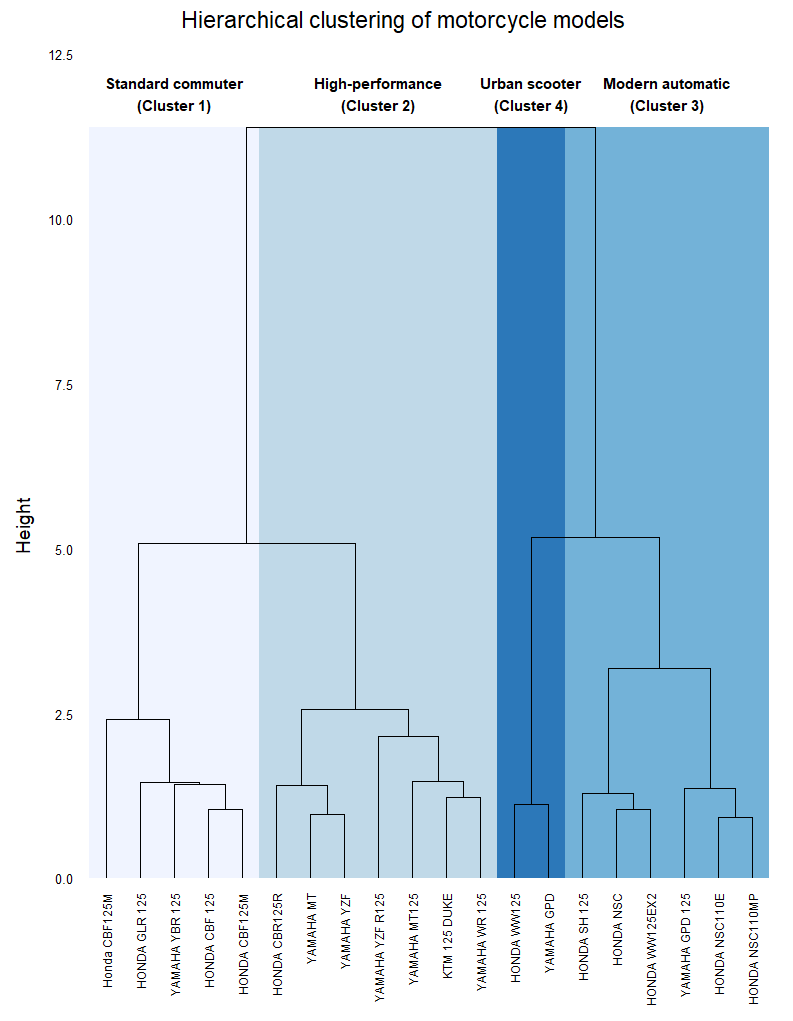
The motorcyclist report used detailed vehicle-level data to move beyond broad classifications and identify distinct risk profiles by motorcycle type.
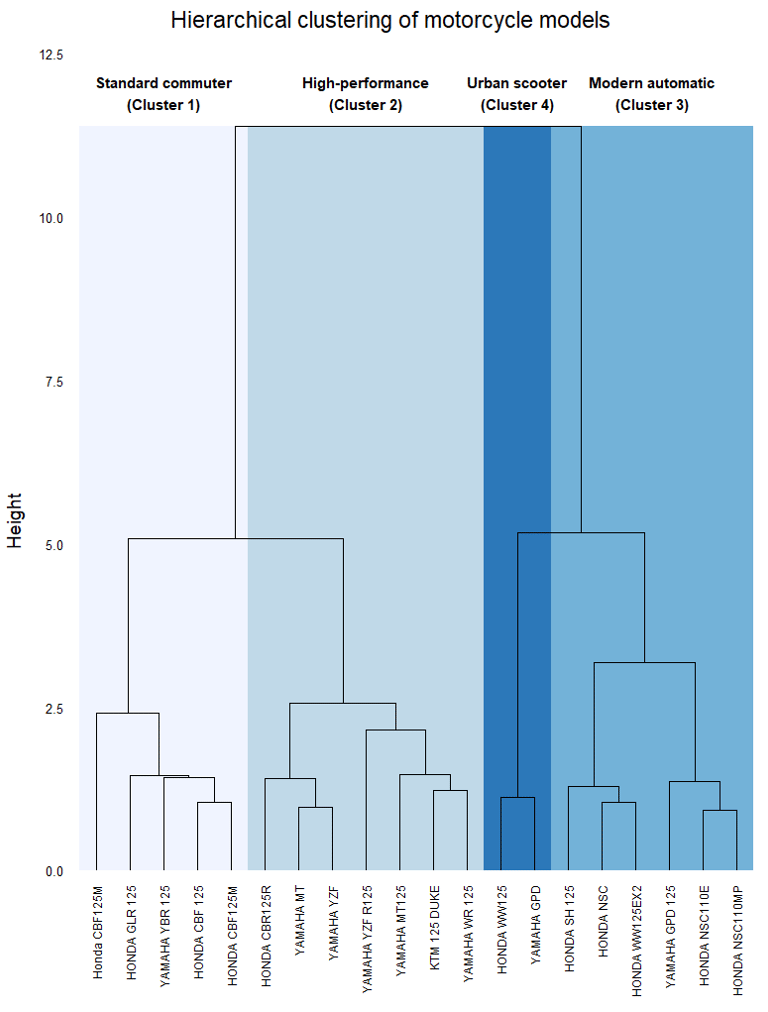
By linking make and model information to collision characteristics, we developed a classification that distinguished motorcycle profiles, including standard commuters, high-performance bikes, urban scooters, and modern automatic bikes.
Statistical analyses then examined how these profiles varied by rider age, gender, and collision outcomes. This revealed that younger male riders were disproportionately represented on higher-performance machines, and that these motorcycles were associated with elevated rates of more severe collisions.
Crucially, the analysis showed that risk is not solely a function of rider characteristics, but emerges from the interaction between rider and machine, highlighting how access to performance capability can amplify underlying behavioural tendencies such as sensation-seeking and risk tolerance.
Collision causation patterns
Analysis of STATS19 contributory factor data revealed recurring patterns in how collisions involving young drivers and motorcyclists occur. For motorcyclists, multiple correspondence analysis (MCA) was used to reduce the set of categorical variables to a smaller number of informative dimensions representing patterns of variable co-occurrence. Hierarchical clustering (HRC) was then applied to the MCA dimensions to identify recurring collision “archetypes”.
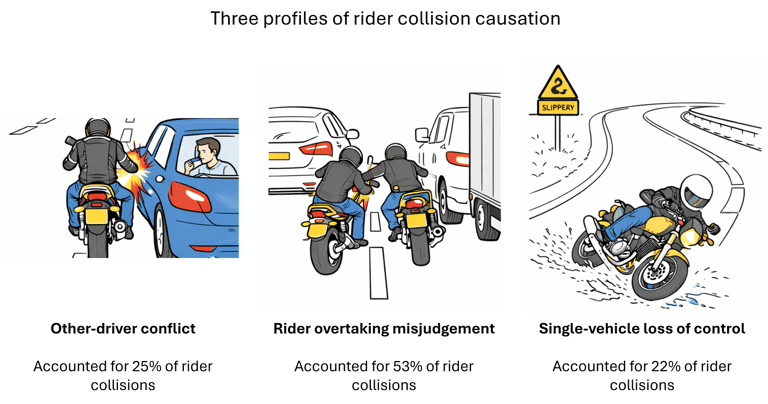
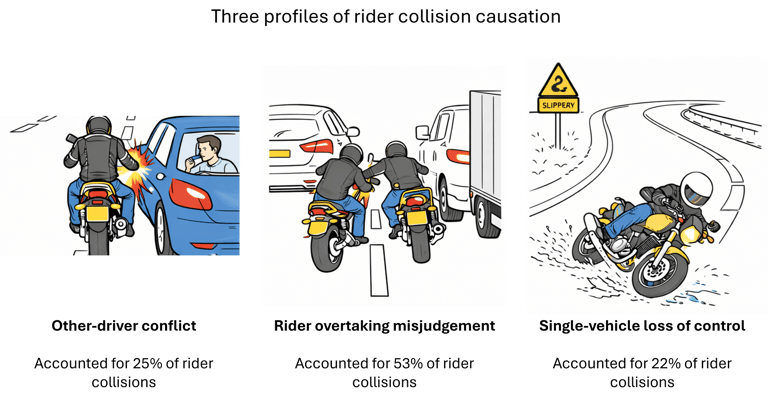
Clustering of injury collisions identified three distinct profiles of collision causation:
Other-driver conflict collisions involved a rider traveling ahead who is struck by another driver who has failed to look properly.
Rider overtaking misjudgement collisions were characterised by overtaking-related conflicts in which riders misjudge the speed or path of other drivers, resulting in frontal impacts.
Single-vehicle loss of control collisions involved single-vehicle loss-of-control, often under slippery or adverse surface conditions and frequently during low-speed manoeuvres such as starting or stopping.
With increasing age, collisions profiles shifted away from rider overtaking misjudgement and towards other-driver conflict collisions. Male riders were more often involved in rider overtaking misjudgement, whereas female riders were more often involved in other-driver conflict.
Insight and Impact
Transforming research into actionable solutions.
Email: jonathan.rolison@outlook.com
© 2025. All rights reserved.
Contact